
La Biblioteca Segreta di Leopoldo
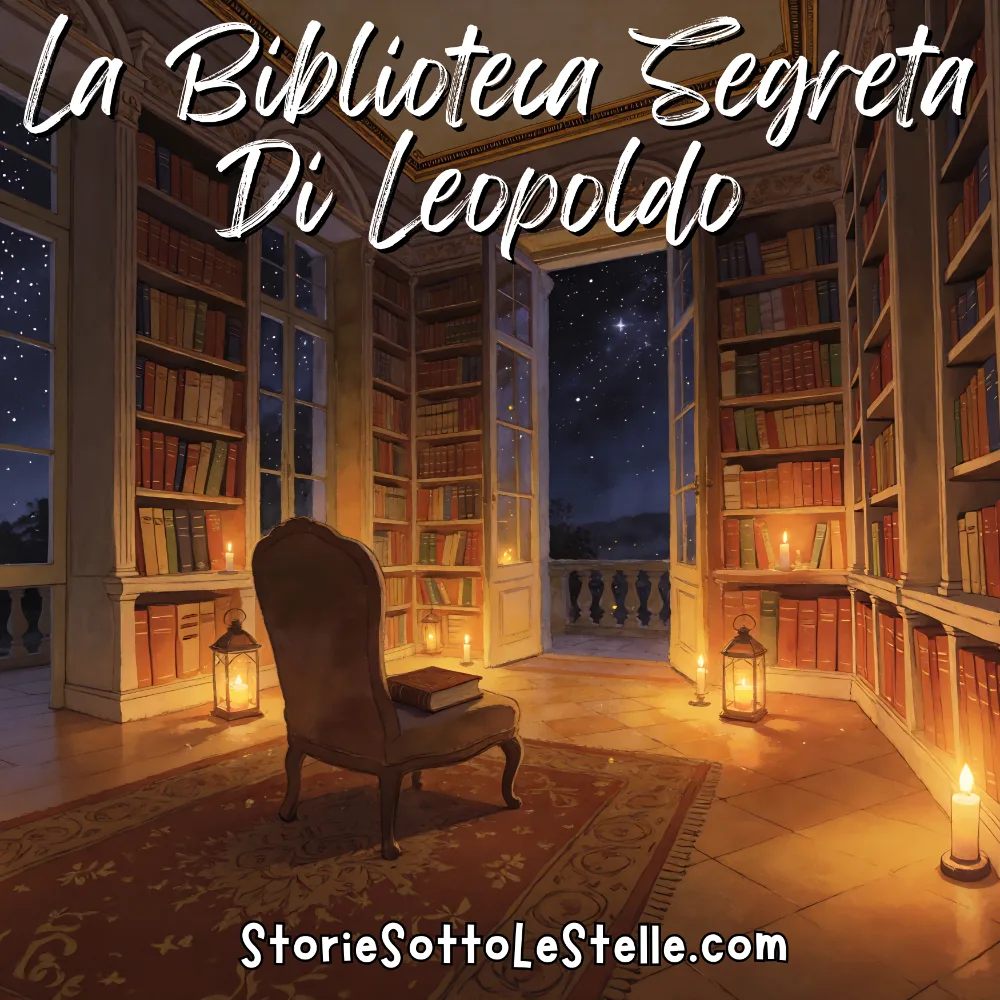
La Biblioteca Segreta di Leopoldo
Certa gente è strana, gli piace passare le serate a leggere libri.
Altri sono ancora più strani — credono alla magia che si trova tra le pagine, alle avventure fantastiche, alle storie di amori impossibili, ai fantasmi che girano fra i vivi e pensano che tutto ciò che non esiste — forse invece sì.
In breve, questa storia è per quelli un po' strani come me e te — insomma, per quelli che.
Allora… ascolta bene.
Se dal centro del paese prendi la via per il monte, trovi una villa vecchia e nobile, che è lì da tanto tempo. Saranno sì e no 350 anni che sta lì in silenzio, osservando e respirando piano sotto il cielo toscano.
Stanze enormi piene di storia, corridoi senza fine e finestre grandi come sogni, ma adesso, invece di piatti e statuine di porcellana, sforna storie su carta per chi le vuole leggere.
Sì, ora è la biblioteca del paese — un po' fuori mano ma tanto bella. Beh, non si può avere tutto.
Insomma, fatto sta che, in una notte d'estate, avvolta da un manto di stelle e la luce soffusa di lanterne delicate, la villa si era riempita di voci, musica, sorrisi e tante storie raccontate e ascoltate, a voce alta o sussurrate, che si intrecciavano nell'abbraccio della festa.
Indubbiamente una serata già speciale, ma fate attenzione perché qualcosa di ancora più insolito stava per avvenire.
Sì, perché anche Elisa era lì. Occhi grandi come il cielo, capelli scuri come la notte e un libro in mano — come sempre.
Nonostante tutto quello che le accadeva intorno, Elisa preferiva leggere.
Era lì, nel corridoio principale: fra il giardino e la corte interna, a mezza strada fra il sicuro e il forse, seduta su una poltrona un po' troppo grande per lei, immersa in una storia misteriosa e avvincente — in un mondo tutto suo.
Gira una pagina, poi un'altra, si accomoda gli occhiali gialli e gira un'altra pagina…
Quando lentamente l'eco di una musica di pianoforte raggiunse le sue orecchie.
Non ci fece tanto attenzione. Credendo che provenisse dal cortile voltò un'altra pagina — e poi un'altra.
Ma in breve tempo si rese conto che le note che sentiva non venivano dal cortile della villa ma da uno dei suoi corridoi — portate da un vento leggero, da luoghi lontani e senza tempo.
Senza pensarci troppo, Elisa si alzò silenziosamente, si mise il libro sotto il braccio e inseguì la musica.
Attraversò antichi corridoi e stanze con scaffali pieni di volumi di ogni dimensione e colori immaginabili — arcobaleni di pensieri e parole in fila per uno che sembravano non finire mai.
Mentre la musica diventava più marcata la luce diminuiva, le stanze che attraversava cominciarono ad apparire dimenticate, le scale di pietra che saliva e scendeva consumate dal tempo, i corridoi laterali erano ora passaggi scuri illuminati solamente da torce alle pareti, che apparivano e scomparivano nel buio come respiri.
Una scala, una porta di legno socchiusa, un altro passaggio, un'altra scala e ancora stanze e scaffali e libri a non finire.
Poi, all'improvviso, una foschia coprì il pavimento come una marea gentile e davanti a lei una grande tenda pesante — socchiusa.
Si intravedeva un po' di luce e poche scalette di legno.
Le salì, quelle piccole scale, e la musica la avvolse come un abbraccio.
Sul palco, candele fluttuavano nell'aria come lucciole in una notte senza tempo. E lì, al centro, seduto davanti a un pianoforte piccolo piccolo, c'era un topo.
Ma non un topo qualunque.
Leopoldo indossava una giacca di tweed verde scuro, pantaloni marroni stirati con cura, e sul musetto, occhiali dorati che brillavano di una saggezza antica e gentile.
Le sue dita danzavano sui tasti come se stessero raccontando un segreto.
«Benvenuta, Elisa» disse, senza smettere di suonare. «Ti stavo aspettando.»
Elisa sbatté gli occhi, incantata. «Come sai il mio nome?»
«Ah,» sorrise Leopoldo, lasciando che l'ultima nota si spegnesse dolcemente nell'aria, «chi ama le storie riconosce sempre chi le cerca.»
Si alzò, si aggiustò la giacca con un gesto elegante, e la guardò con occhi pieni di stelle.
«Sai dove sei?»
«Nella biblioteca del paese,» rispose Elisa, ma la sua voce tremava un po', come se sapesse che la risposta era un'altra.
«Quella la conoscono tutti,» disse Leopoldo, scendendo piano dal palco. «Ogni paese ne ha una che tutti conoscono. Ma ogni paese ne ha anche un'altra — una che quasi nessuno trova.»
Fece una pausa, gli occhi che brillavano.
«Tu hai trovato la seconda.»
Leopoldo la guidò verso una grande porta di legno che Elisa avrebbe giurato non esserci un attimo prima. Si aprì lentamente, senza rumore, come un sospiro trattenuto troppo a lungo.
E quello che vide le tolse il fiato.
Scaffali infiniti si arrampicavano verso l'alto, scendevano verso il basso, si estendevano in ogni direzione come spirali di galassie fatte di carta e sogni. Candele galleggiavano ovunque, illuminando libri che sembravano respirare, pulsare piano, come cuori addormentati.
«Che posto è questo?» sussurrò Elisa.
«Questa,» disse Leopoldo camminando tra gli scaffali, «è la biblioteca dei libri mai scritti.»
Elisa lo seguì, confusa. «Libri mai scritti? Ma come possono esistere?»
Leopoldo si fermò, si voltò, e la guardò con dolcezza infinita.
«Ogni storia sognata esiste, Elisa. Ogni avventura immaginata prima di dormire. Ogni racconto pensato ma mai messo su carta. Vivono tutti qui, al confine tra il mondo e il sogno, aspettando.»
Si fermarono davanti a uno scaffale.
Leopoldo indicò un libro piccolo, rilegato in blu come un cielo d'estate.
«Toccalo,» disse piano.
Elisa allungò la mano, esitante, e sfiorò la copertina.
Un calore gentile le attraversò le dita. E per un istante — solo un istante — sentì una risata di bambino, vide un drago fatto di nuvole, e un castello costruito con cuscini e coperte.
«Questo,» disse Leopoldo, «era il sogno di un bambino di sei anni. Una storia che raccontava ogni sera al suo orsacchiotto. Non l'ha mai scritta. Ma esiste. Vedi? Esiste.»
Elisa sorrise, il cuore leggero.
Camminarono ancora, tra corridoi di storie silenziose, finché Leopoldo si fermò davanti a un altro libro.
Questo era diverso. Più grande, rilegato in pelle scura, con lettere dorate che sembravano tremare.
«E questo?» chiese Elisa, piano.
«Questo,» disse Leopoldo, e la sua voce si fece morbida come una carezza, «apparteneva a una nonna.»
Elisa lo toccò.
E sentì qualcosa di diverso.
Non una risata, questa volta. Ma una voce calda, lontana, che raccontava di una bambina coraggiosa che attraversava un bosco incantato per portare la luce a un villaggio dimenticato.
«Era la storia che voleva lasciare ai suoi nipoti,» spiegò Leopoldo. «Ma il tempo... il tempo a volte corre più veloce dei sogni. Non ha fatto in tempo a scriverla.»
Elisa sentì gli occhi pizzicare.
«Ma è qui,» sussurrò.
«È qui,» confermò Leopoldo. «Per sempre.»
Continuarono a camminare, in silenzio, finché arrivarono a uno scaffale diverso dagli altri.
Era quasi vuoto. Solo pochi libri, distanziati, e tanti spazi aperti, in attesa.
Al centro, un libro senza titolo.
La copertina era bianca, pulita, come neve appena caduta, come una pagina che aspetta il primo segno.
«Posso?» chiese Elisa.
Leopoldo annuì.
Lo toccò.
Niente. Nessun calore. Nessuna voce. Solo silenzio. Ma un silenzio pieno, come un respiro trattenuto.
«Questo libro è vuoto,» disse Elisa, sorpresa.
«Non ancora scritto,» corresse Leopoldo. «Nemmeno sognato. Non ancora. Aspetta qualcuno che trovi il coraggio di immaginarlo.»
Si voltò verso di lei, e i suoi occhi brillarono come le candele che fluttuavano intorno.
«Forse aspetta te. Forse aspetta qualcun altro. Ma aspetta.»
Elisa rimase ferma, a guardare quel libro bianco.
E capì.
Capì che ogni storia che aveva immaginato, ogni avventura inventata prima di dormire, ogni sogno che credeva perso al risveglio, esisteva da qualche parte.
E capì qualcos'altro.
Che non bisogna avere paura di scrivere.
Perché le storie esistono già — nel cuore, nella mente, nei sogni. Metterle su carta non è crearle dal nulla. È solo aprire una porta e lasciarle uscire.
«Devo andare, vero?» disse Elisa, piano.
Leopoldo sorrise. «Il tuo mondo ti aspetta. Ma ora sai che questo posto esiste. E sai che ogni storia che sognerai avrà sempre un posto qui, che tu la scriva o no.»
Fece una pausa.
«Ma se la scrivi,» aggiunse con un sorriso furbo, «potrà vivere anche là fuori. E quella, mia cara, è un'altra magia ancora.»
Elisa si ritrovò nel corridoio della villa, seduta sulla poltrona un po' troppo grande per lei, il libro ancora sotto il braccio.
La festa continuava, voci e musica e risate, come se il tempo non fosse mai passato.
Ma qualcosa era cambiato.
Lei era cambiata.
Aprì il libro che stava leggendo, guardò le pagine, e sorrise.
Poi lo chiuse.
Perché adesso sapeva che le storie più belle non sono solo quelle che leggiamo.
Sono quelle che portiamo dentro, quelle che sogniamo ad occhi aperti, e quelle che un giorno, con un po' di coraggio, osiamo raccontare.
Leopoldo's Secret Library
Some people are strange — they like to spend their evenings reading books.
Others are even stranger — they believe in the magic found between pages, in fantastical adventures, in stories of impossible love, in ghosts that walk among the living, and they think that everything that doesn't exist — maybe does after all.
In short, this story is for those who are a little strange, like you and me — you know, for those who.
So… listen.
If you take the road up the hill from the center of town, you'll find an old and noble villa, one that has been there for a very long time. It must be about 350 years now that it has stood there in silence, watching and breathing softly beneath the Tuscan sky.
Enormous rooms filled with history, endless corridors, and windows as large as dreams — but now, instead of porcelain plates and figurines, it gives us stories on paper for those who wish to read them.
Yes, now it's the town library — a bit out of the way, but so beautiful. Well, you can't have everything.
Now, on a summer night, wrapped in a blanket of stars and the soft glow of delicate lanterns, the villa had filled with voices, music, smiles, and so many stories told and heard, spoken aloud or whispered, intertwining in the embrace of the celebration.
A special evening already, no doubt, but pay attention, because something even more unusual was about to happen.
Yes, because Elisa was there too. Eyes as wide as the sky, hair as dark as the night, and a book in her hand — as always.
Despite everything happening around her, Elisa preferred to read.
She was there, in the main corridor: between the garden and the inner courtyard, halfway between the certain and the perhaps, sitting in an armchair a little too big for her, lost in a mysterious and captivating story — in a world all her own.
She turns a page, then another, adjusts her yellow glasses, and turns another page…
When slowly, the echo of piano music reached her ears.
She didn't pay much attention. Thinking it came from the courtyard, she turned another page — and then another.
But before long she realized that the notes she heard were not coming from the villa's courtyard but from one of its corridors — carried by a gentle breeze, from faraway places outside of time.
Without thinking too much, Elisa rose silently, tucked her book under her arm, and followed the music.
She crossed ancient corridors and rooms with shelves full of volumes of every size and color imaginable — rainbows of thoughts and words lined up one by one that seemed to never end.
As the music grew stronger, the light faded, the rooms she passed through began to appear forgotten, the stone stairs she climbed and descended worn by time, the side corridors were now dark passages lit only by torches on the walls, appearing and disappearing in the darkness like breaths.
A staircase, a wooden door left ajar, another passage, another staircase, and still more rooms and shelves and books without end.
Then, suddenly, a mist covered the floor like a gentle tide, and there, before her, a heavy curtain — half open.
A little light showed through, and a few small wooden steps.
She climbed them, those little stairs, and the music wrapped around her like an embrace.
On the stage, candles floated in the air like fireflies on a timeless night. And there, at the center, seated before a tiny piano, was a mouse.
But not just any mouse.
Leopoldo wore a dark green tweed jacket, brown trousers pressed with care, and on his little snout, golden spectacles that gleamed with ancient and gentle wisdom.
His fingers danced on the keys as if they were telling a secret.
"Welcome, Elisa," he said, without stopping his playing. "I've been waiting for you."
Elisa blinked, enchanted. "How do you know my name?"
"Ah," Leopoldo smiled, letting the last note fade softly into the air, "those who love stories always recognize those who seek them."
He stood, adjusted his jacket with an elegant gesture, and looked at her with eyes full of stars.
"Do you know where you are?"
"In the town library," Elisa answered, but her voice trembled a little, as if she knew the answer was something else.
"That one everyone knows," said Leopoldo, stepping down slowly from the stage. "Every town has one that everyone knows. But every town also has another — one that almost no one finds."
He paused, his eyes gleaming.
"You have found the second."
Leopoldo led her toward a large wooden door that Elisa could have sworn wasn't there a moment before. It opened slowly, without a sound, like a sigh held too long.
And what she saw took her breath away.
Endless shelves climbed upward, descended downward, stretched in every direction like spirals of galaxies made of paper and dreams. Candles floated everywhere, illuminating books that seemed to breathe, to pulse softly, like sleeping hearts.
"What is this place?" Elisa whispered.
"This," said Leopoldo, walking among the shelves, "is the library of books never written."
Elisa followed, confused. "Books never written? But how can they exist?"
Leopoldo stopped, turned, and looked at her with infinite gentleness.
"Every story ever dreamed exists, Elisa. Every adventure imagined before sleep. Every tale thought but never put to paper. They all live here, at the border between the world and the dream, waiting."
They stopped before a shelf.
Leopoldo pointed to a small book, bound in blue like a summer sky.
"Touch it," he said softly.
Elisa reached out, hesitant, and brushed the cover.
A gentle warmth passed through her fingers. And for an instant — just an instant — she heard a child's laughter, saw a dragon made of clouds, and a castle built of pillows and blankets.
"This," said Leopoldo, "was the dream of a six-year-old boy. A story he told his teddy bear every night. He never wrote it down. But it exists. You see? It exists."
Elisa smiled, her heart light.
They walked on, through corridors of silent stories, until Leopoldo stopped before another book.
This one was different. Larger, bound in dark leather, with golden letters that seemed to tremble.
"And this one?" asked Elisa, quietly.
"This one," said Leopoldo, and his voice grew soft as a caress, "belonged to a grandmother."
Elisa touched it.
And she felt something different.
Not laughter, this time. But a warm, distant voice, telling of a brave little girl who crossed an enchanted forest to bring light to a forgotten village.
"It was the story she wanted to leave her grandchildren," Leopoldo explained. "But time… time sometimes runs faster than dreams. She didn't have time to write it."
Elisa felt her eyes sting.
"But it's here," she whispered.
"It's here," Leopoldo confirmed. "Forever."
They continued walking, in silence, until they reached a shelf unlike the others.
It was nearly empty. Only a few books, spaced apart, and so many open spaces, waiting.
At the center, a book without a title.
The cover was white, clean, like freshly fallen snow, like a page waiting for its first mark.
"May I?" asked Elisa.
Leopoldo nodded.
She touched it.
Nothing. No warmth. No voice. Only silence. But a full silence, like a breath held.
"This book is empty," said Elisa, surprised.
"Not yet written," Leopoldo corrected. "Not even dreamed. Not yet. It waits for someone to find the courage to imagine it."
He turned toward her, and his eyes shone like the candles floating around them.
"Perhaps it waits for you. Perhaps it waits for someone else. But it waits."
Elisa stood still, looking at that white book.
And she understood.
She understood that every story she had ever imagined, every adventure invented before sleep, every dream she thought lost upon waking, existed somewhere.
And she understood something else.
That you don't have to be afraid to write.
Because stories already exist — in the heart, in the mind, in dreams. Putting them on paper is not creating them from nothing. It is only opening a door and letting them out.
"I have to go, don't I?" said Elisa, softly.
Leopoldo smiled. "Your world awaits you. But now you know this place exists. And you know that every story you dream will always have a place here, whether you write it or not."
He paused.
"But if you do write it," he added with a sly smile, "it can live out there too. And that, my dear, is another kind of magic."
Elisa found herself back in the villa's corridor, sitting in the armchair a little too big for her, the book still under her arm.
The celebration went on, voices and music and laughter, as if no time had passed at all.
But something had changed.
She had changed.
She opened the book she had been reading, looked at the pages, and smiled.
Then she closed it.
Because now she knew that the most beautiful stories are not only the ones we read.
They are the ones we carry inside, the ones we dream with our eyes open, and the ones that one day, with a little courage, we dare to tell.
Trova le Storie Sotto Le Stelle sul tuo lettore preferito. Find Storie Sotto Le Stelle on your favourite player.