
Un mistero a Firenze
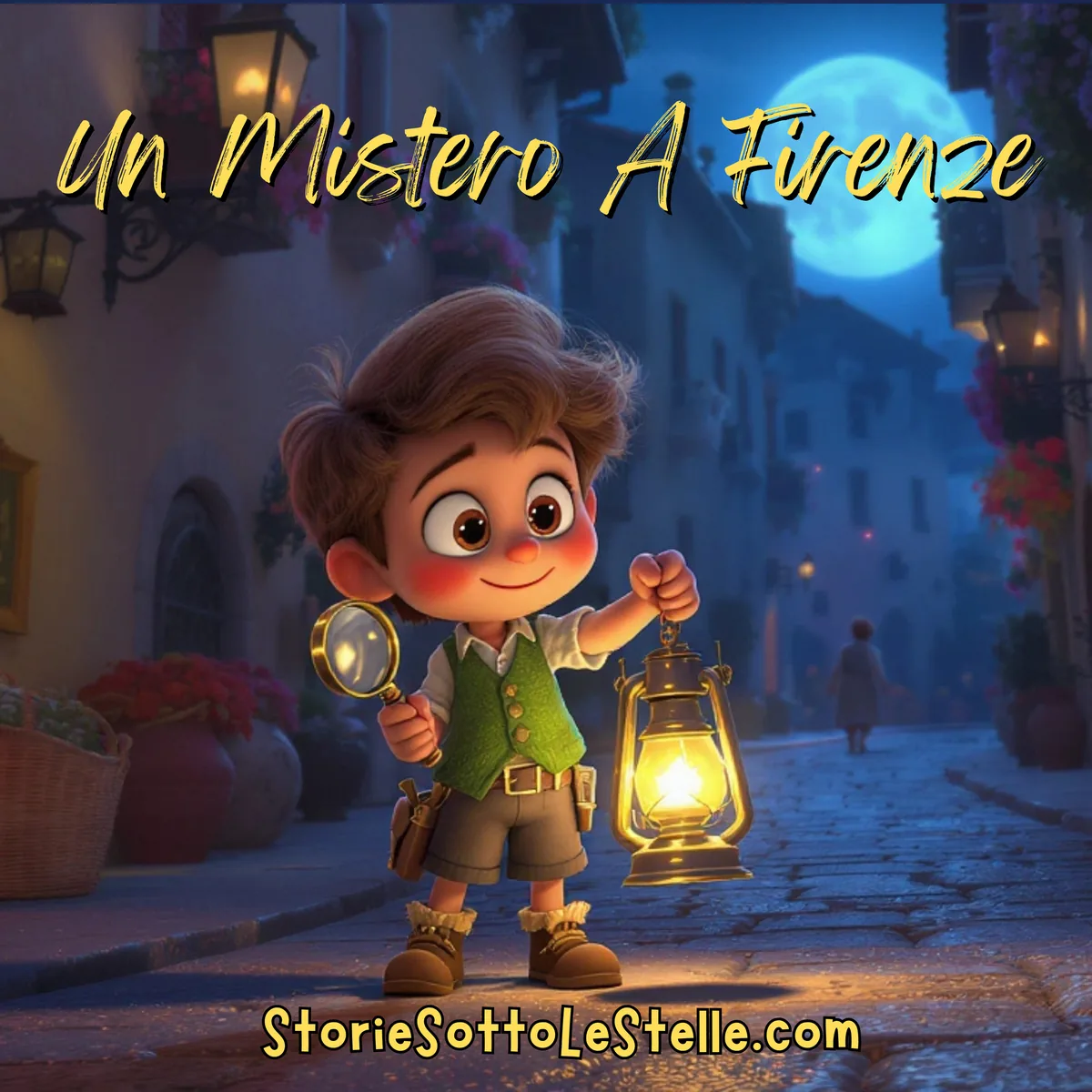
Un mistero a Firenze
In Toscana c’è tanta magia: colline decorate con olivi, vigneti e cipressi, campanili che suonano ovunque, giardini nascosti e ovviamente città incantate, piene di storia e bellezza, dove artisti famosi hanno creato opere d’arte meravigliose.
In questo racconto ci troviamo nella città di Firenze, dove la magia abbonda e in ogni angolo si nascondono leggende.
Un fiume chiamato Arno l’attraversa; fra i tanti ponti ce n’è uno che giustamente è un po’ più famoso degli altri: il Ponte Vecchio. In quelle case sospese adesso non ci abita più nessuno. Ogni giorno è pieno di turisti che lo fotografano e lo vengono a visitare da tutto il mondo, ma tanti e tanti anni fa su questo ponte c’erano macellai, pescivendoli e conciatori, come se fosse un mercato, una piazza sospesa sull’Arno. La vita quotidiana era ben diversa dai giorni d’oggi.
Ai tempi di questa storia le botteghe erano tutte gioiellerie di proprietà di mastri orafi, che lì ci vivevano, lavoravano e vendevano gioielli d’oro e preziosi di altissima qualità. Era uno dei cuori della città dove i fiorentini del tempo si ritrovavano e si fermavano a chiacchierare mentre andavano e venivano da una parte all’altra del fiume. Anche i ragazzini ci passavano le giornate divertendosi a giocare, correndo da un lato all’altro, indisturbati.
A questo punto dovete sapere che da qualche giorno avvenivano piccoli furti nelle botteghe degli artigiani. Oro e preziosi sparivano come se rubati dal vento, in silenzio e di sorpresa, senza lasciare traccia. Chi sa chi lo sa? Chi poteva essere il colpevole?
Gli orafi si riunirono, dopo la chiusura dei negozi, proprio sul ponte.
«Ma che cosa sta succedendo?» disse uno.
«Boh, a saperlo…» disse un altro.
«E mica si può andare avanti così, a passare da bischeri!»
Bernardo, uno degli orafi, disse: «Va bene che sono un po’ sbadato, ma di sicuro non sono cieco da non vedere se mi manca dell’oro dalla bottega.»
E via a farsi domande e interrogarsi fra di loro per cercare di trovare una spiegazione per questi furti, scoprire il ladro e magari ritrovare il maltolto.
Insomma, era ormai da settimane che dalle botteghe sparivano pagliuzze della lavorazione dell’oro e vari oggetti preziosi — e tutto questo succedeva sotto gli occhi di tutti ma nessuno aveva visto niente.
A chi dare la colpa se non a quei monelli dispettosi che si divertivano a giocare a pallone sul ponte! Fra partitelle, risate, corse, giochi vari e nascondino, chissà se qualcuno di loro non si era messo a rubare qua e là.
Passarono altri giorni e altro oro era svanito nel nulla. Gli orafi, stanchi di questa storia, uscirono sul ponte e gridarono a gran voce tutti insieme: «Ora ci siamo proprio divertiti ed è ora di farla finita! Catturiamo il ladro!»
Anche il fornaio Giulio uscì sull’uscio della sua bottega, a sinistra, in fondo al ponte, e benché non avesse capito di preciso cosa stava succedendo, mostrò a tutti le mani piene di farina gridando: «Io non c’entro, lo giuro! Le mani in pasta le ho solo perché sono sempre a preparare le focacce da cuocere in forno.»
E, così dicendo, si unì agli altri, gridando: «Prendiamo il ladro con le mani nel sacco prima che quel sacco diventi quello della farina!»
In quel fermento, Lapo, un ragazzino assai furbo e curioso, figlio dell’orafo Bernardo, che era amico di tutti e giocava insieme agli altri ragazzini sul ponte, dopo aver riflettuto pensò: «C’è qualcosa che non mi torna: noi ragazzi non rubiamo, di chi può essere la colpa?»
Così Lapo decise di indagare per conto suo. Perché, come gli diceva sempre suo nonno, «conta più una cosa fatta che cento da fare» e poi aggiungeva che «se fai da te fai per tre.»
Allora, senza tanti discorsi, la sera seguente si organizzò, procurandosi una lente d’ingrandimento, un quaderno con matita per prendere note e una lanterna che lo avrebbe accompagnato nel buio. Quest’ultima la teneva stretta con una mano un po’ tremolante, ma non c’era da esitare — la situazione non si sarebbe risolta da sola.
All’imbrunire, si avviò dal Ponte Vecchio, dove abitava con suo babbo sopra la bottega, verso la colonna di Piazza Santa Trinita.
Lì sopra c’era, e c’è ancora, la Statua della Giustizia che troneggiava così alta da toccare il cielo. Il percorso non era lungo, ma quella sera ci mise più del normale, perché osservava tutto con attenzione e curiosità. Guardava a destra, a sinistra, nei chiassi, oltre il parapetto del Lungarno e se vedeva un sasso spostava anche quello: «non si sa mai dove si possono trovare degli indizi,» pensava.
Aveva sentito dire che la colonna e la Statua della Giustizia fossero magiche e piene di segreti. Ma la cosa più stupefacente era che dalla sua sommità, dove appunto si trovava la statua, si potesse vedere quello che succedeva in ogni punto della città — come si sa la giustizia vede e sa tutto.
Arrivato in Piazza Santa Trinita, fece un gran sospiro, mosse un ultimo passo e ai piedi della colonna — che sorpresa… incontrò una lumaca.
«Una lumaca?» direte voi. «Eh, proprio una lumaca con tanto di casa sulle spalle, con le luci alle finestre e un caminetto acceso.» Davvero, ve lo dico io… Credeteci… Insomma era lì, che si muoveva, lenta sì, ma determinata. Quando sentì il passo leggero del visitatore inatteso, si insospettì e, ritirando le antenne come fossero freni, si fermò di botto e disse:
«Altolà! Chi va là? Ma te chi sei e dove vai? Non starai mica cercando guai, a girellare solo soletto a quest’ora del crepuscolo?»
«No, ma che guai… anzi, tutt’altro Signora Lumaca,» rispose Lapo, «io dovrei andare in cima alla colonna per vedere cosa sta succedendo sul Ponte Vecchio. Ci sono delle cose che non tornano tanto bene e sto indagando. Come può vedere ho pure la lente d’ingrandimento e il cappello!» disse Lapo, mostrando gli oggetti per evitare fraintendimenti. «Ora, visto che mi sembra del posto, mica mi saprebbe gentilmente dire, come posso fare a salire lassù?»
La lumaca, che abitava ai piedi della colonna ed era a tutti gli effetti la sua guardiana, sbuffò ma poi sorrise e mostrò a Lapo una piccola porticina alla base della colonna, nascosta dall’edera.
«Carissimo Lapo,» disse, aggiustandosi gli occhiali, «mi sembri un ragazzo coraggioso, un vero amico e anche un bravo investigatore, ma solo dalla cima della colonna potrai conoscere la verità.»
Detto ciò, la lumaca sfregò i suoi tentacoli e cominciarono a brillare di una luce magica che avvolse Lapo facendolo diventare dell’altezza della porta, che si aprì con un gran cigolio; talmente acuto da far scappare tutti gli uccelli che nella notte bazzicavano intorno.
Lapo, ora piccino, piccino, ringraziò la lumaca e senza paura entrò all’interno della colonna. Nell’oscurità, rimase impressionato da uno stretto e alto pozzo che saliva invece di scendere. Sulle pareti luccicanti c’era una spirale di minuscoli scalini. Lapo cominciò a salirla con passi determinati, con la lanterna accesa ben stretta in mano. Arrivò in cima.
Nella notte il cielo stellato illuminava la Statua della Giustizia che troneggiava su Firenze. Aveva una bilancia con due piatti in equilibrio in una mano e una spada dorata nell’altra.
Come abbiamo detto in precedenza, per incantesimo, da lì si poteva vedere tutta la città — bastava guardare nella direzione giusta e pensare alla parte di Firenze che volevi vedere: una magia incredibile per una visione da togliere il fiato.
Adesso era il momento di concentrarsi sul Ponte Vecchio e cercare di risolvere il mistero dei furti, ma nel muoversi intorno alla statua, per andare dalla parte che guardava il fiume, fece una scoperta incredibile. Non poteva credere ai propri occhi — tanto è vero che tirò fuori la lente d’ingrandimento per essere sicuro. Tutti e due i piatti della bilancia erano pieni di pagliuzze d’oro e monili preziosi.
«Mamma mia! E questa roba come c’è arrivata quassù?» esclamò Lapo con gli occhi spalancati. «Questo è indubbiamente il bottino dei furti alle gioiellerie!»
Prima, confuso e stupefatto, non sapeva che pensare, ma poi, osservando meglio le pagliuzze, si rese conto che erano tutte intrecciate con braccialetti e collanine: questi erano due nidi e un’idea gli balenò subito nella mente.
«Le gazze ladre!» esclamò Lapo. «Quegli uccelli furbetti amano tutto ciò che brilla. Certamente sono state loro a rapinare le botteghe e a portare quassù la refurtiva.»
E nel bel mezzo di questo pensiero, all’improvviso comparvero in volo. Atterrarono sulla colonna agitate e furiose: «KRAA KRAA KRAA! Oh, ragazzino, ma cosa stai facendo a casa nostra? Non ti provare nemmeno a toccare queste meraviglie luccicanti; sono il nostro nido, le abbiamo trovate noi e sono nostre.»
Lapo non si fece spaventare e con calma rispose: «Ma che dite? A voi piacciono cose luccicanti che brillano e le prendete, ma non vuol certo dire che sono vostre.»
Le gazze gracchiavano tutte insieme. Sembravano impazzite e non conoscevano ragione. «Ma cosa dice questo?» disse una. «Già, uno viene a casa nostra e pretende di comandare?» aggiunse un’altra. «Sì, bellina la battuta. Non sono nostre? Ma che sei un comico? Cambia lavoro, guarda, perché non ci fai mica ridere,» disse un’altra.
E tutte a ridere.
Al che Lapo non si fece intimidire. Si frugò in tasca e trovò quello che cercava. Propose uno scambio. «E se si facesse un affare. A dire il vero io ci rimetto parecchio, ma mi state talmente simpatiche che vi darei volentieri queste belle biglie luccicanti in cambio dell’oro e dei monili.»
Vedendo quei piccoli tesori brillanti e colorati, che non avevano mai visto prima, le gazze si calmarono. Si guardarono con uno sguardo furbo e senza esitazione… «Affare fatto!»
Gli presero le biglie di mano in un battibaleno e volarono via gridando: «Evviva, siamo ricchissime! Da ora in poi faremo collezione di queste palline.»
Sospirando di sollievo e di soddisfazione, Lapo recuperò la refurtiva e scese a rotta di collo dalla colonna. La lumaca lo stava aspettando, applaudendo. Con un altro incantesimo lo fece uscire dalla porticina e apparire proprio sul Ponte Vecchio, dove diversi fiorentini erano a prendere il fresco e chiacchierare — inclusi gli orefici.
«Babbo, babbo, ho scoperto il mistero e trovato il colpevole: le gazze ladre! Sono state loro! I miei amici non hanno fatto niente di male.»
«Calma, figliolo, ti ascolto,» rispose Bernardo.
Lapo con tutto il fiato che aveva in gola non perse un attimo e raccontò tutto quello che aveva scoperto e visto: il cappello da investigatore, la lente d’ingrandimento, la lumaca magica che conosceva i segreti della colonna, la porticina, la statua in cima, la vista di Firenze, le gazze ladre e il trucco delle biglie colorate. Finalmente il mistero degli strani furti era chiarito. Tutta la refurtiva recuperata fu restituita agli orafi del Ponte Vecchio per merito dell’intraprendente e coraggioso Lapo.
A quel punto tutti quelli che erano sul Ponte Vecchio applaudirono gridando: «Hurra, hurra, hurra, al piccolo investigatore!» Mentre il ponte antico, forse incantato, risplendeva di luci dorate.
Il fornaio Giulio, mentre infornava focacce, canticchiava allegramente e con voce squillante annunciava: «Oggi focacce a volontà gratis per tutti, dobbiamo festeggiare!»
Le gazze ladre ritornarono a volare sui tetti di Firenze e continuarono a trovare piccoli oggetti e persino pezzi di sogni luccicanti. Gracchiando, dicevano: «Sarà pure che abbiamo perso un nido, ma di sicuro abbiamo trovato una storia da raccontare.»
E forse, chissà, una nuova storia ci sarà!
A Mystery in Florence
In Tuscany there is so much magic: hills decked with olive trees, vineyards and cypresses, bell-towers ringing everywhere, hidden gardens and of course enchanted cities, full of history and beauty, where famous artists have created marvellous works of art.
In this tale we find ourselves in the city of Florence, where magic abounds and in every corner legends lie hidden.
A river called the Arno runs through it; and amongst the many bridges there is one that, quite rightly, is a little more famous than the others: the Ponte Vecchio. In those suspended houses no one lives any more. Every day it is full of tourists who photograph it and come to visit it from all over the world, but many, many years ago on this bridge there were butchers, fishmongers and tanners, as if it were a market, a square suspended over the Arno. Daily life was very different from today’s.
In the time of this story the shops were all jewellers’ belonging to master goldsmiths who lived, worked and sold gold jewellery and precious items of the highest quality there. It was one of the hearts of the city where the Florentines of the time would meet and stop to chat as they came and went from one side of the river to the other. Even the children spent their days playing, running from one side to the other, undisturbed.
At this point you must know that for some days small thefts had been happening in the craftsmen’s shops. Gold and precious things vanished as if stolen by the wind, in silence and by surprise, leaving no trace. Who knows, who knows? Who could the culprit be?
The goldsmiths gathered, once the shops were closed, right on the bridge.
“But what on earth is going on?” said one.
“Well, if only we knew…” said another.
“And we can’t carry on like this, looking like fools!”
Bernardo, one of the goldsmiths, said: “I may be a touch absent-minded, but I’m certainly not so blind as to miss gold gone from my shop.”
And off they went, asking questions and quizzing one another to try to find an explanation for these thefts, find the thief and perhaps recover what had been taken.
In short, for weeks now gold filings and various precious objects had been disappearing from the shops — and all this was happening under everyone’s eyes, yet no one had seen a thing.
Who was to blame, if not those mischievous rascals who enjoyed playing ball on the bridge! Between little matches, laughter, racing about, all sorts of games and hide-and-seek, who could say if one of them hadn’t taken to thieving here and there.
More days passed and more gold had vanished into thin air. The goldsmiths, weary of this business, came out onto the bridge and shouted all together at the tops of their voices: “Now we’ve really had our fill, and it’s time to put a stop to this! Let’s catch the thief!”
Giulio the baker came out to the threshold of his shop, too, on the left at the end of the bridge and, although he hadn’t quite understood what was going on, he showed everyone his floury hands, shouting: “I’ve had nothing to do with it, I swear! My hands are in the dough only because I’m always making focaccia ready for the oven.”
And, saying that, he joined the others, shouting: “Let’s catch the thief red-handed before that hand-sack becomes a flour-sack!”
In all this commotion, Lapo, a very clever and curious boy, son of the goldsmith Bernardo, who was friends with everyone and used to play with the other children on the bridge, after thinking it over thought: “There’s something here that doesn’t add up: we children don’t steal — so whose fault can it be?”
So Lapo decided to investigate on his own. Because, as his grandfather always told him, “one thing done counts more than a hundred yet to do,” and he would add that “if you do it yourself, you do the work of three.”
So, without much ado, the following evening he got himself ready, fetching a magnifying glass, a notebook and pencil to take notes, and a lantern to keep him company in the dark. The lantern he held tight in a slightly trembling hand, but there was no hesitating — things weren’t going to sort themselves out.
At dusk, he set off from the Ponte Vecchio, where he lived with his Babbo above the shop, towards the column in Piazza Santa Trinita.
Up there was, and still is, the Statue of Justice, which towered so high it touched the sky. The walk was not long, but that evening it took him longer than usual, because he was looking at everything with attention and curiosity. He looked right, left, into the narrow streets, beyond the parapet of the Lungarno, and if he saw a stone he moved that too: “you never know where you might find a clue,” he thought.
He had heard it said that the column and the Statue of Justice were magical and full of secrets. But the most astonishing thing was that from its summit, where the statue stood, you could see what was happening at every point in the city — for, as we know, justice sees and knows everything.
Once in Piazza Santa Trinita, he gave a great sigh, took one last step and at the foot of the column — what a surprise… he met a snail.
“A snail?” you will say. “Yes, a proper snail with its very own house on its back, lights in the windows and a fire lit in the hearth.” Truly, I tell you… Believe it… In short, there she was, moving along, slowly yes, but determined. When she heard the light footstep of the unexpected visitor, she grew suspicious and, drawing in her antennae as if they were brakes, came to a dead stop and said:
“Halt! Who goes there? But who are you, and where are you going? You’re not looking for trouble, are you, wandering about all on your own at this hour of dusk?”
“No, no trouble at all… on the contrary, Mrs Snail,” replied Lapo, “I ought to go to the top of the column to see what’s happening on the Ponte Vecchio. There are things that don’t quite add up and I’m investigating. As you can see, I even have the magnifying glass and the hat!” said Lapo, showing the items so as to avoid any misunderstanding. “Now, since you seem to be from around here, would you kindly tell me how I can get up there?”
The snail, who lived at the foot of the column and was to all intents and purposes its guardian, huffed but then smiled and showed Lapo a small door at the base of the column, hidden by ivy.
“Dearest Lapo,” she said, adjusting her spectacles, “you seem to me a brave boy, a true friend and a fine investigator too — but only from the top of the column will you come to know the truth.”
Saying that, the snail rubbed her tentacles, and they began to shine with a magical light that wrapped Lapo and made him the very height of the door, which opened with a great creak; so sharp that all the birds who liked to flit about there in the night flew away.
Lapo, now tiny, tiny, thanked the snail and without fear stepped inside the column. In the darkness, he was struck by a narrow, high well that climbed upwards instead of going down. On the gleaming walls there was a spiral of tiny steps. Lapo began to climb them with determination, the lit lantern held tight in his hand. He reached the top.
In the night, the starry sky lit up the Statue of Justice that towered over Florence. She held a pair of scales with two balanced plates in one hand, and a golden sword in the other.
As we said before, by enchantment, from up there you could see the whole city — you only had to look in the right direction and think of the part of Florence you wanted to see: an incredible magic, for a breath-taking view.
Now was the moment to concentrate on the Ponte Vecchio and try to solve the mystery of the thefts; but as he moved around the statue, to go round to the side that looked over the river, he made an incredible discovery. He couldn’t believe his own eyes — so much so that he took out the magnifying glass to be sure. Both plates of the scales were full of gold filings and precious trinkets.
“Good heavens! And how on earth did this stuff get up here?” exclaimed Lapo, his eyes wide. “This is without a doubt the loot from the thefts at the jewellers!”
At first, confused and astonished, he didn’t know what to think, but then, looking more carefully at the filings, he realised they were all woven through with little bracelets and necklaces: these were two nests, and an idea immediately flashed into his mind.
“The thieving magpies!” exclaimed Lapo. “Those crafty birds love anything that glitters. They are surely the ones who raided the shops and brought the loot up here.”
And in the middle of this thought, suddenly they appeared in flight. They landed on the column agitated and furious: “KRAA KRAA KRAA! Oh, little boy, just what are you doing at our home? Don’t you so much as dare to touch these glittering treasures; they’re our nest, we found them and they are ours.”
Lapo wasn’t about to be frightened and replied calmly: “What are you saying? You like glittering things that shine and you take them, but that certainly doesn’t mean they’re yours.”
The magpies were all chattering together. They seemed to have gone mad and would hear no reason. “And what is this one saying?” said one. “Yes, someone comes to our home and expects to give orders?” added another. “Yes, a fine joke. They’re not ours? Are you a comedian? Change your job, look, because you’re not making us laugh,” said another.
And they all burst out laughing.
At which Lapo refused to be intimidated. He fished in his pocket and found what he was looking for. He proposed a swap. “What if we made a deal? To tell the truth I lose out a fair bit, but you’re all so likeable that I’d gladly give you these pretty glittering marbles in exchange for the gold and the trinkets.”
On seeing those small, bright, colourful treasures, which they had never seen before, the magpies calmed down. They looked at each other with a sly look and, without hesitation… “Deal!”
They snatched the marbles from his hand in a flash and flew away crying: “Hooray, we’re rich! From now on we’ll collect these little balls.”
Sighing with relief and satisfaction, Lapo gathered up the stolen goods and rushed headlong down from the column. The snail was waiting for him, applauding. With another spell she made him come out through the little door and appear right on the Ponte Vecchio, where several Florentines were taking the evening air and chatting — the goldsmiths among them.
“Babbo, Babbo, I’ve solved the mystery and found the culprits: the thieving magpies! It was them! My friends didn’t do anything wrong.”
“Calm down, my boy, I’m listening,” replied Bernardo.
Lapo, with all the breath he had in his throat, didn’t waste a moment and told everything he had discovered and seen: the investigator’s hat, the magnifying glass, the magical snail who knew the secrets of the column, the little door, the statue at the summit, the view of Florence, the thieving magpies and the trick with the coloured marbles. At last the mystery of the strange thefts was solved. All the recovered loot was returned to the goldsmiths of the Ponte Vecchio thanks to the enterprising and courageous Lapo.
At that point everyone on the Ponte Vecchio applauded and cried out: “Hooray, hooray, hooray, for the little investigator!” While the ancient bridge, perhaps enchanted itself, glowed with golden lights.
Giulio the baker, while loading the oven with focaccia, hummed away merrily and, with a ringing voice, announced: “Today, focaccia for everyone, free of charge — we must celebrate!”
The thieving magpies returned to flying over the rooftops of Florence and went on finding small things and even pieces of glittering dreams. Chattering away, they said: “We may have lost a nest, but we’ve certainly found a story to tell.”
And perhaps, who knows, there will be a new story to come!
Trova le Storie Sotto Le Stelle sul tuo lettore preferito. Find Storie Sotto Le Stelle on your favourite player.