
I robot sulla collina
I robot sulla collina
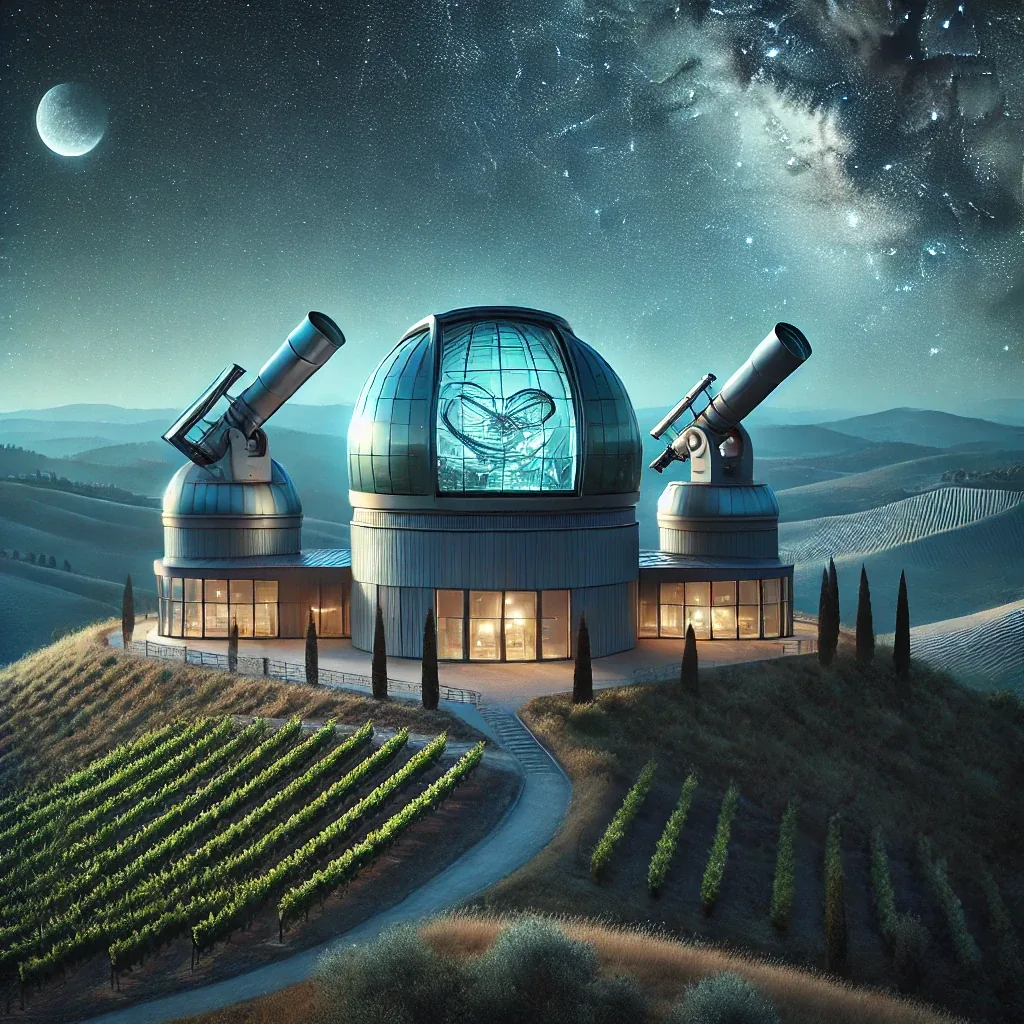
In una luminosa giornata di primavera, dei bambini in gita scolastica passarono nelle vicinanze dell’Osservatorio sulla Collina. Il grande edificio scintillante era una meraviglia architettonica, con alte torri che svettavano verso il cielo, cupole argentate che brillavano al sole e telescopi giganteschi che spuntavano come occhi curiosi, sempre pronti a esplorare l’universo. Era la prima volta che lo vedevano da vicino e, ai loro occhi, apparve come la meraviglia delle meraviglie.
Rientrati a scuola, i bambini non riuscivano a smettere di pensare a quel luogo misterioso e, durante le rimanenti ore di lezione, alzavano spesso le mani per fare domande. Ma le risposte degli insegnanti erano vaghe e i loro dubbi rimasero irrisolti. A essere sinceri, non è che molti in paese sapessero un granché di quella costruzione. Era lì da così tanto tempo che nessuno ci faceva più caso. Forse c’era sempre stata.
Tra gli studenti di quella classe c’erano un fratello e una sorella, che erano forse un po’ più curiosi degli altri. Tornati a casa, decisero di andare a trovare la nonna che, più spesso che non, sapeva rispondere alle loro domande più strane:
«Nonna, tu che ci racconti sempre delle memorie del passato, e che una giostra e un carillon erano i tuoi giochi più cari, potresti dirci qualcosa del futuro? Quali segreti si nascondono nel cielo? Cosa succede nel grande Osservatorio sulla Collina?»
La nonna sorrise e i suoi occhi si illuminarono di un misterioso luccichio. I due nipoti, tra l’altro, erano sicuri che la nonna nascondesse qualche segreto nel suo garage super privato. In effetti, la nonna non era solo appassionata di storie di altri tempi: leggeva tantissimo, ascoltava la radio e spesso, la notte, osservava il cielo con degli attrezzi peculiari. Ed era proprio in cielo che aveva un caro amico, il Mago del Sapere, con cui aveva collaborato spesso in passato per decifrare i misteri dell’universo e del futuro.
Senza esitazione, la nonna decise di chiamarlo via radio, così che fosse lui a rispondere ai suoi curiosi nipoti. Dopo qualche istante, il Mago del Sapere apparve con la sua navicella spaziale scintillante. Fluttuava accanto a lui un libro magico, che si apriva e si chiudeva da solo, rivelando segni strani, antiche formule e segreti.
Il Mago si rivolse ai bambini con un sorriso saggio e disse loro che l’Osservatorio sulla Collina è aperto a 360° sul mondo, fatto di vetrate dalla visuale infinita, da dove si può studiare l’universo intero. Dei robot, provenienti da pianeti lontani, l’hanno scoperto mentre girovagavano sulla Terra. Per svolgere i loro studi come scienziati astronomi, era il luogo perfetto.
I robot che lo abitavano ed erano al comando del progetto di ricerca avevano nomi particolari:
ASSO, il Robot più bravo ad organizzare le cose, era a capo della spedizione.
CONNI, il Robot esploratore, che era connesso con l’universo e lo comprendeva più di tutti gli altri.
UNO, il Robot genio della matematica, contava le stelle e tutti i corpi celesti volanti, comprese le meteore e le stelle cadenti.
SALUS, il Robot ricercatore e conoscitore del Pianeta Terra, scrutava tutti i suoi abitanti e ogni cambiamento, dagli ecosistemi alla biodiversità.
AUDIO, l’Intelligenza Artificiale che non si vedeva, ma che era responsabile di tutte le comunicazioni spaziali e coordinava le scoperte tra i vari pianeti.
Oltre a spiegare a voce, il Mago del Sapere invitò la nonna e i nipoti a salire a bordo della sua navicella e insieme fluttuarono lentamente verso l’osservatorio. La gravità sembrava sospesa e tutto intorno a loro brillava di una luce magica.
Il Mago offrì loro dei palloncini colorati che li sollevarono in aria e, dal tetto aperto della navicella, li trasportarono fino ai vetri dell’Osservatorio.
Che meraviglia! C’erano centinaia di attrezzature e tantissimi robot di diverse dimensioni che si muovevano tutti indaffarati. Fra di loro spiccavano per grandezza, forma e colore Asso, Conni, Uno e Salus. Guardavano in alto, sorpresi e meravigliati alla vista dei visitatori, e non sapevano come comportarsi. I bambini inviavano baci e saluti, ma i robot, che non conoscevano l’affetto, si scambiarono solo segnali luminosi e si rimisero a lavorare come di consueto. Chissà quali pensieri avevano e che segreti nascondevano nei loro cervelli elettronici.
Una volta tornati a casa, erano contenti per l’avventura, ma la loro curiosità era cresciuta ancora di più. Il lavoro dei robot sarebbe continuato, ma, secondo loro, era necessario che potessero interagire con gli uomini per condividere le loro scoperte e collaborare per un mondo migliore.
I robot che avevano visto dalle vetrate erano di poche parole e troppo presi dai loro incarichi per chiacchierare con loro. Ma forse era proprio quello che non si vedeva che poteva essere la soluzione: AUDIO, l’Intelligenza Artificiale!
Per contattarlo serviva un’idea brillante: la radio della nonna poteva essere quello che ci voleva. Ma con qualche modifica. Immediatamente la corredarono con un’antenna e un microfono super potenti. Senza indugi provarono a mettersi in contatto con AUDIO, spiegando la loro idea. Ma nessuna risposta arrivò. Cambiando frequenze, provarono per diverse sere, ma senza fortuna.
Un giorno, la nonna, mentre cucinava spaghetti al pomodoro e basilico, ascoltava notizie sull’universo sintonizzata su una nuova radio locale chiamata Stazione Spaziale. Per caso, ci fu un’interferenza e, fra una forchettata di spaghetti e un’altra, nell’aggiustare la sintonia, intercettò una voce metallica che sembrava voler comunicare con i suoi nipoti. Non c’erano dubbi: capì che la trasmissione arrivava dall’Osservatorio sulla Collina e che quello era AUDIO!
La nonna informò subito i suoi nipoti e tutti i bambini del paese, che felici si ritrovavano ogni giorno dopo la scuola per parlare con AUDIO. Parlavano un po’ di tutto e, mentre loro imparavano tante cose, altrettanto faceva lui. E così anche gli altri robot, con i quali AUDIO poteva fare da traduttore.
Il tempo passava e tante informazioni e scoperte continuavano ad arrivare dall’Osservatorio. Dopo un anno che si conoscevano, i bambini chiesero ad AUDIO:
«Possiamo festeggiare con una torta con le candeline?»
AUDIO rispose: «Io non ho età e il tempo non fa differenza per me. Poi, per essere sincero, lo zucchero fa male agli ingranaggi. Mangiate voi la torta e fate spegnere le candeline dal vento.»
I bambini sorrisero, comprendendo che la loro curiosità aveva davvero aperto una finestra sul futuro.
«Ecco!» esclamarono di gioia, «AUDIO e i suoi amici sono una delle meraviglie del futuro.»
La nonna, in un giorno di pioggia e sole, tirò fuori dal garage la sua mini navetta spaziale, la mise rapidamente in moto e, dopo una sosta di rifornimento sull’arcobaleno, raggiunse a velocità incredibile il Pianeta della Sapienza per un saluto e un tè delle cinque con l’amico Mago.
Tornò a casa prima del buio e, dopo aver parcheggiato la sua mini navetta spaziale nel garage segreto, si rilassò in giardino. Mentre era seduta sulla sua sedia a dondolo, arrivarono i suoi nipoti, che le chiesero:
«Cosa guardi?»
«Sto osservando il cielo, sai, è affollato di astronauti su navicelle spaziali, alcune dirette verso la Luna, altre verso Marte e persino oltre.»
«Tu la sai lunga, nonna,» le dissero sorridendo. «La giostrina e il carillon erano il tuo passato, ora conosci i segreti del futuro. Brava! E se un giorno volerai di nuovo, faccelo sapere; ti guarderemo insieme ai robot e ai nostri amici. Magari un giorno potremmo venire con te in una delle tue avventure spaziali. Che ne dici, nonna?»
La nonna sorrise e, guardando il cielo stellato, rispose: «Chissà? Un giorno, forse verrete con me!»
The Robots on the Hill
On a bright spring day, some schoolchildren on an outing passed near the Observatory on the Hill. The great gleaming building was an architectural wonder, with tall towers reaching towards the sky, silver domes shining in the sun and gigantic telescopes peeping out like curious eyes, ever ready to explore the universe. It was the first time they had seen it up close and, to their eyes, it appeared as the wonder of wonders.
Back at school, the children couldn’t stop thinking about that mysterious place and, during what remained of the lesson, they kept raising their hands to ask questions. But the teachers’ answers were vague, and their questions stayed unanswered. To tell the truth, not many in the town knew very much about that building. It had been there so long that nobody paid it any heed any more. Perhaps it had always been there.
Among the pupils of that class there were a brother and a sister, who were perhaps a little more curious than the others. When they got home, they decided to go and visit Nonna, who, more often than not, knew how to answer their strangest questions:
“Nonna, you who always tell us memories of the past, and that a merry-go-round and a music box were your favourite things to play with, could you tell us something about the future? What secrets are hidden in the sky? What happens in the great Observatory on the Hill?”
Nonna smiled and her eyes lit up with a mysterious sparkle. The two grandchildren, by the way, were quite sure that Nonna was hiding some secret in her super-private garage. In truth, Nonna was not only fond of stories of olden times: she read a great deal, she listened to the radio and often, at night, she would observe the sky with peculiar instruments. And it was up there in the sky that she had a dear friend, the Wizard of Knowledge, with whom she had often worked in the past to decipher the mysteries of the universe and of what was to come.
Without hesitation, Nonna decided to call him on the radio, so that he himself might answer her curious grandchildren. After a few moments, the Wizard of Knowledge appeared with his gleaming spaceship. Floating beside him was a magical book that opened and closed of its own accord, revealing strange signs, ancient formulas and secrets.
The Wizard turned to the children with a wise smile and told them that the Observatory on the Hill is open 360° onto the world, made of vast windows with views into the infinite, from which one can study the whole universe. Some robots, come from distant planets, had discovered it while wandering about the Earth. For carrying out their studies as astronomer-scientists, it was the perfect place.
The robots that lived there and were in charge of the research project had particular names:
ASSO, the Robot best at organising things, was the head of the expedition.
CONNI, the Explorer Robot, who was connected to the universe and understood it better than all the others.
UNO, the Maths Genius Robot, counted the stars and all flying celestial bodies, including meteors and shooting stars.
SALUS, the Researcher Robot, knower of Planet Earth, watched over all its inhabitants and every change, from ecosystems to biodiversity.
AUDIO, the Artificial Intelligence that could not be seen, but who was responsible for all space communications and coordinated discoveries between the various planets.
Beyond his spoken explanation, the Wizard of Knowledge invited Nonna and the grandchildren to come aboard his spaceship and together they floated slowly towards the observatory. Gravity seemed suspended, and everything around them shone with a magical light.
The Wizard offered them colourful balloons that lifted them up into the air and, through the open roof of the spaceship, carried them to the windows of the Observatory.
What a wonder! There were hundreds of instruments and ever so many robots of different sizes, all busy at their tasks. Among them, in size, shape and colour, stood out Asso, Conni, Uno and Salus. They looked up, surprised and astonished at the sight of the visitors, and didn’t know how to behave. The children blew kisses and waved greetings, but the robots, who knew nothing of affection, only exchanged signals of light and went back to their usual work. Who could say what thoughts they had, and what secrets they hid in their electronic brains.
Once they were back home, they were happy about the adventure, but their curiosity had grown still more. The robots’ work would carry on, but, in their view, it was necessary that they should be able to interact with people, to share their discoveries and work together for a better world.
The robots they had seen through the windows were of few words and too taken up by their tasks to chat with them. But perhaps what could not be seen was the very thing that might be the answer: AUDIO, the Artificial Intelligence!
To get in touch with him a clever idea was needed: Nonna’s radio could be just the thing. But it would need some changes. They at once fitted it with a super-powerful antenna and microphone. Without delay they tried to make contact with AUDIO, explaining their idea. But no answer came. They changed frequencies, they tried evening after evening, but no luck.
One day, Nonna, while she was cooking spaghetti with tomato and basil, was listening to news of the universe, tuned to a new local radio station called Space Station. By chance, there was a burst of interference and, between one forkful of spaghetti and another, as she adjusted the tuning, she caught a metallic voice that seemed to want to speak with her grandchildren. There was no doubt: she realised that the transmission was coming from the Observatory on the Hill, and that it was AUDIO!
Nonna told her grandchildren at once, and all the children in the town, who, delighted, gathered every day after school to talk with AUDIO. They talked about all sorts of things and, while they were learning a great deal, so too was he. And so were the other robots, for whom AUDIO could act as a translator.
Time went by, and a great deal of information and many discoveries kept arriving from the Observatory. After they had known each other for a year, the children asked AUDIO:
“May we celebrate with a cake and candles?”
AUDIO replied: “I have no age, and time makes no difference to me. Besides, to tell the truth, sugar is bad for cogs. You eat the cake, and let the wind blow out the candles.”
The children smiled, understanding that their curiosity had truly opened a window onto the future.
“That’s it!” they cried with delight. “AUDIO and his friends are one of the wonders of the future.”
Nonna, on a day of sun and rain, fetched her mini-spaceship out of the garage, started it up sharply and, after a refuelling stop on the rainbow, reached the Planet of Wisdom at incredible speed for a hello and a five o’clock tea with her friend the Wizard.
She returned home before dark and, after parking her mini-spaceship in the secret garage, relaxed in the garden. While she was sitting in her rocking chair, her grandchildren came along, and they asked her:
“What are you looking at?”
“I’m watching the sky, you know — it’s crowded with astronauts in spaceships, some heading for the Moon, others for Mars and even beyond.”
“You know all about it, Nonna,” they told her, smiling. “The little merry-go-round and the music box were your past, now you know the secrets of the future. Well done! And if one day you fly off again, do let us know; we’ll watch with the robots and our friends. Maybe one day we could come along with you on one of your space adventures. What do you say, Nonna?”
Nonna smiled and, looking up at the starry sky, replied: “Who knows? One day, perhaps you shall come with me!”
Trova le Storie Sotto Le Stelle sul tuo lettore preferito. Find Storie Sotto Le Stelle on your favourite player.